
Table of Contents
- Why a Podcast Strategy is Non-Negotiable in a Corporate Setting
- The 1-Page Corporate Podcast Strategy Framework
- Implementing Your Strategy: The Right Tech Stack
- Common Mistakes to Avoid in Podcast Planning
- Your 1-Page Podcast Strategy Template
- From Strategy to Action
Why a Podcast Strategy is Non-Negotiable in a Corporate Setting
In the corporate world, every initiative must justify its existence. Unlike a hobbyist podcast, a corporate podcast is an investment that competes for resources, time, and attention. A documented strategy is not just a plan; it's a business case. It's what you'll use to secure budget from leadership, align your cross-functional teams (from Comms to Sales), and prove ROI down the line.
Without a clear podcast strategy, you risk:
- Content Drift: Creating episodes that don't serve your audience or your business goals.
- Inconsistent Quality: Struggling with audio issues, disjointed branding, and an unprofessional final product.
- Wasted Resources: Pouring time and money into production with no clear way to measure impact.
- Lack of Buy-in: Failing to get the support needed from management and other departments to make the podcast a success.
A solid strategy transforms your podcast from a creative side project into a powerful communication and marketing engine.
The 1-Page Corporate Podcast Strategy Framework
Condensing your strategy to a single page forces clarity and focus. It becomes a shareable, easy-to-understand document for all stakeholders. Here are the essential components.
Section 1: The 'Why' - Goals & KPIs
Every decision flows from your primary objective. What business problem is this podcast trying to solve? Be specific and attach measurable Key Performance Indicators (KPIs).
- Internal Communications: Goal is to increase employee engagement and alignment. KPIs: Episode completion rates on the company intranet, positive feedback in employee surveys, reduction in questions at all-hands meetings.
- Marketing & Brand Building: Goal is to establish thought leadership and generate brand awareness. KPIs: Total downloads, listener growth month-over-month, social media mentions, press features.
- Sales Enablement: Goal is to educate prospects and accelerate the sales cycle. KPIs: Number of leads influenced by the podcast, content used in sales conversations, feedback from the sales team.
- HR & Employer Branding: Goal is to attract top talent and showcase company culture. KPIs: Mentions in candidate interviews, increased traffic to the careers page, shares by employees on LinkedIn.
Need more help defining your goals? Our guide on how to start a corporate podcast provides a detailed breakdown.
Section 2: The 'Who' - Audience Definition
You cannot create content for 'everyone'. In a corporate context, your audience is highly specific. Create a simple persona.
- Internal Audience Example: "A recently hired sales representative, age 25-35, who is remote and needs to quickly get up to speed on our products and competitive landscape."
- External Audience Example: "A VP of Marketing at a mid-market tech company, age 40-55, who is researching solutions for customer retention and values data-driven insights."
Knowing your 'who' informs your tone, topics, and distribution channels. The sales rep might listen via a link in Microsoft Teams, while the VP might discover your show on Spotify or LinkedIn.
Section 3: The 'What' - Content Pillars & Format
Content pillars are 3-5 core topics your podcast will consistently cover. This ensures focus and makes it easier to brainstorm episodes. For a sales enablement podcast, pillars could be: 1) Prospecting Tactics, 2) Competitor Analysis, and 3) Closing Strategies.
Next, choose a format that serves your goals and audience:
- Interview-Based: Great for thought leadership, featuring internal experts or external industry leaders.
- Panel Discussion: Brings multiple perspectives together, ideal for exploring complex topics.
- Solo/Narrative: Perfect for executive briefings, training modules, or deep-dive storytelling.
- News/Recap: A weekly or monthly update on company news or industry trends.
Section 4: The 'How' - Production & Distribution Workflow
This is where strategy meets execution. A seamless workflow is critical for distributed corporate teams. This covers recording, editing, and publishing.
Recording: Quality is non-negotiable. Your brand's reputation is on the line. Use a platform designed for professional audio. Hypecast Studio allows you to record with remote guests anywhere in the world, capturing separate, high-fidelity audio and video tracks for each participant. Unlike consumer tools, it offers the stability and quality enterprises demand.
Post-Production: This used to be the most time-consuming part. Now, AI can accelerate it. HypecastAI automates the entire process by generating precise transcriptions, executive summaries, and detailed show notes in minutes. This frees your team to focus on content, not tedious administrative tasks.
Distribution: Where will your audience listen? For internal podcasts, the answer isn't Apple Podcasts. It's your digital workplace. Hypecast integrates directly with intranets like Staffbase, Haiilo, and Unily, as well as Microsoft Teams and SharePoint, putting your content right where your employees work. For external shows, Hypecast also handles seamless distribution to public directories like Spotify and Apple Podcasts. Get the details in our guide on how to publish your podcast.
Corporate Reality Check
Your podcast strategy needs to account for brand safety, legal reviews, and access control. Who can create content? Who needs to approve it before it goes live? Enterprise platforms like Hypecast are built with this in mind, offering user roles, permissions, and centralized governance that you won't find in creator-focused tools like Descript or Riverside.fm.
Implementing Your Strategy: The Right Tech Stack
Your strategy is only as good as the tools you use to execute it. A corporate podcast requires a tool stack built for security, collaboration, and scalability.
Hypecast Workflow: From Strategy to Social Clip
- Record Professionally: Invite your CEO, a guest expert, or team members to a Hypecast Studio session. They join via a simple link—no software to install. The platform records separate, high-quality audio and video tracks for maximum editing flexibility.
- Automate Post-Production: Once recording is complete, HypecastAI gets to work. Within minutes, you have a word-for-word transcript, a concise summary, and structured show notes.
- Create Promotional Assets: Don't let your podcast live in a silo. Use Promo Clips to automatically identify the most compelling moments and generate branded video clips for LinkedIn, X, and your intranet.
- Distribute Securely: Publish an internal leadership podcast directly to your SharePoint or Staffbase intranet with Hypecast's native integrations. At the same time, publish your B2B marketing podcast to Spotify and Apple Podcasts.
- Measure Performance: Track listener engagement, completion rates, and audience demographics in the Hypecast analytics dashboard to prove ROI to stakeholders.
Choosing a Recording Platform: Enterprise vs. Creator Tools
While tools like SquadCast and Zencastr are popular with individual creators, they often lack the features enterprises need. Corporate podcasting requires a platform that understands security, user management, and seamless integration into existing workflows. Hypecast is an end-to-end solution designed for this reality, combining recording, AI-powered production, and internal/external distribution in one secure platform. For a full comparison, see our breakdown of the best podcast recording software for corporations.
Essential Gear for Your Team
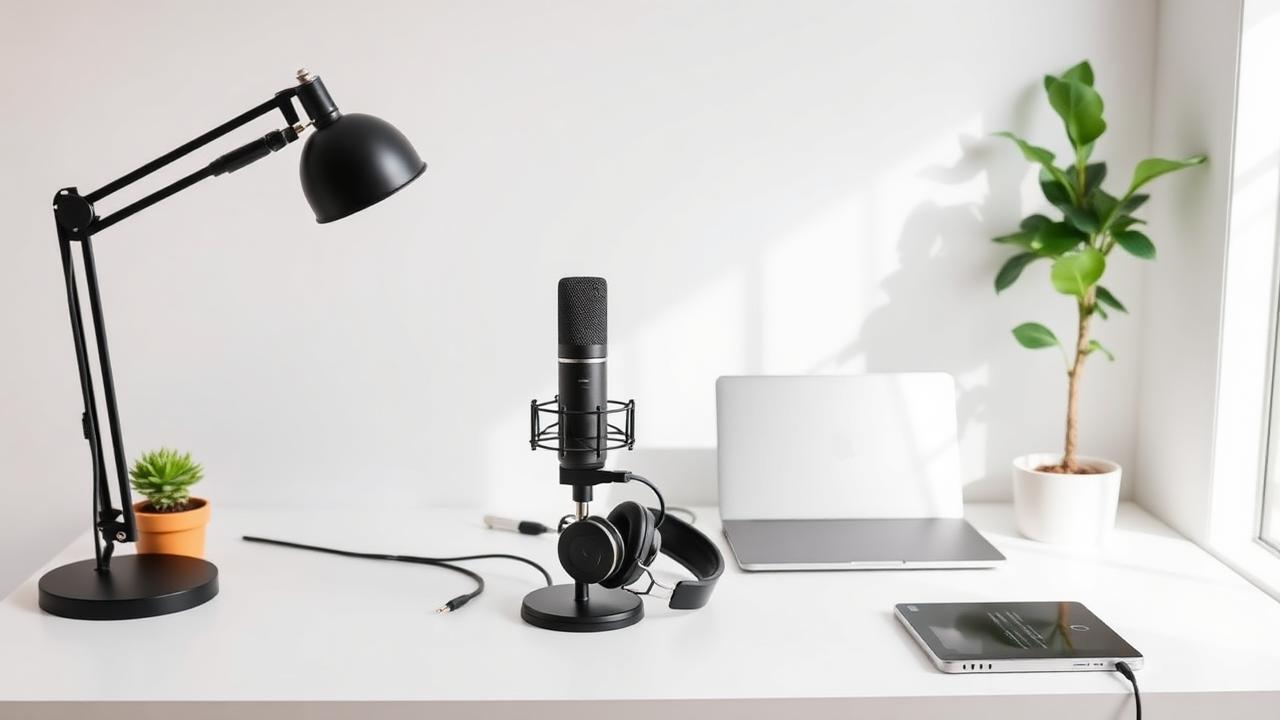
While Hypecast ensures pristine recording on the software side, good hardware is also key. You don't need a full broadcast studio. A quality USB microphone can deliver excellent results for your distributed team.
- Professional Tier: Shure SM7B (with an audio interface), Electro-Voice RE20. These are industry standards for a reason.
- High-Quality USB: Shure MV7i, Rode PodMic USB, Audio-Technica AT2020 USB+. These offer plug-and-play simplicity with fantastic quality.
- Budget-Friendly & Reliable: Samson Q2U, Audio-Technica ATR2100x-USB. These offer both USB and XLR connections, making them versatile starter mics.
For more recommendations, explore our guides on the best corporate podcast microphones and building the best podcast setup for your team.
Recommended Corporate Podcasting Tool Stack
- All-in-One Platform: Hypecast (for recording, AI content repurposing, internal integrations, and hosting)
- Project Management: Asana, Trello, or Jira (for your content calendar and approval workflows)
- Graphic Design: Figma or Canva (for cover art and promotional graphics)
- Individual/Beginner Hosting: For solo podcasters just starting out and not yet needing enterprise features, a simple host like PodHQ can be a place to test the waters with basic hosting and distribution before scaling up.
Common Mistakes to Avoid in Podcast Planning
A great strategy also anticipates potential pitfalls. Watch out for these common errors:
- 'Field of Dreams' Fallacy: Thinking 'if we build it, they will listen'. Promotion is half the battle. Your strategy must include a promotion plan.
- Ignoring Analytics: Not tracking what's working. Use your platform's analytics to see which topics resonate and which fall flat.
- Inconsistent Publishing: Losing audience trust by publishing sporadically. A content calendar is essential.
- Poor Audio Quality: Recording in a noisy room or with a bad microphone. This is an instant credibility killer.
- Lack of a Clear CTA: Every episode should guide the listener to do something, whether it's visiting a webpage, downloading a report, or connecting with the sales team.
Your 1-Page Podcast Strategy Template
Use this checklist to build your own one-page strategy document.
Podcast Title: [Your Show's Name]
- Primary Goal: (e.g., Improve employee engagement, Generate qualified marketing leads)
- Success Metrics / KPIs: (e.g., 70% average completion rate, 20 MQLs per quarter)
- Target Audience Persona: (Job title, needs, listening habits)
- Show Format: (e.g., Weekly 20-minute interview with internal experts)
- Content Pillars:
- Pillar 1: [e.g., Company Culture & Values]
- Pillar 2: [e.g., Product Innovation Deep Dives]
- Pillar 3: [e.g., Customer Success Stories] - Production Workflow & Tools:
- Recording: Hypecast Studio
- Post-Production: HypecastAI (Transcription, Show Notes)
- Asset Creation: Hypecast Promo Clips - Distribution Channels:
- Primary: [e.g., Staffbase Intranet, Microsoft Teams]
- Secondary: [e.g., Spotify, Apple Podcasts, LinkedIn] - Promotion Plan: (e.g., Announce in company newsletter, share video clips on social, feature in sales outreach emails)
From Strategy to Action
A strategy on paper is just the first step. The real magic happens when you bring it to life with the right tools and a consistent process. By building your podcast on an enterprise-grade platform like Hypecast, you ensure your strategy is not only powerful but also scalable, secure, and seamlessly integrated into your business.
Ready to put your strategy into practice? See how Hypecast can power your corporate podcast from the first recording to the final analytic. Book a demo with Hypecast today.